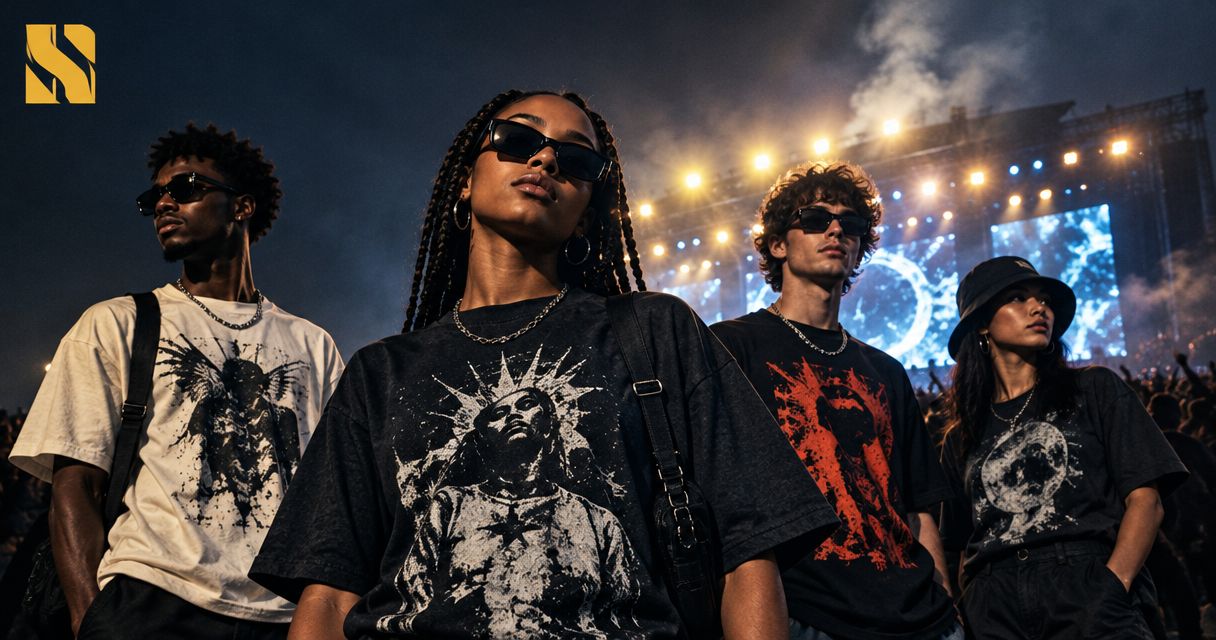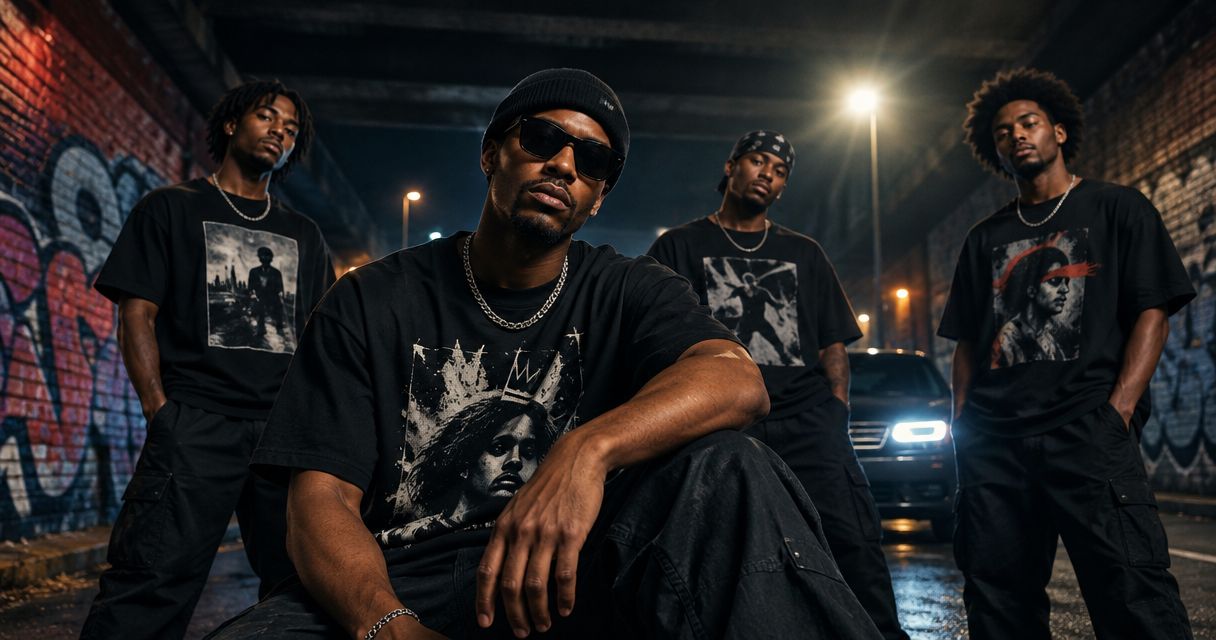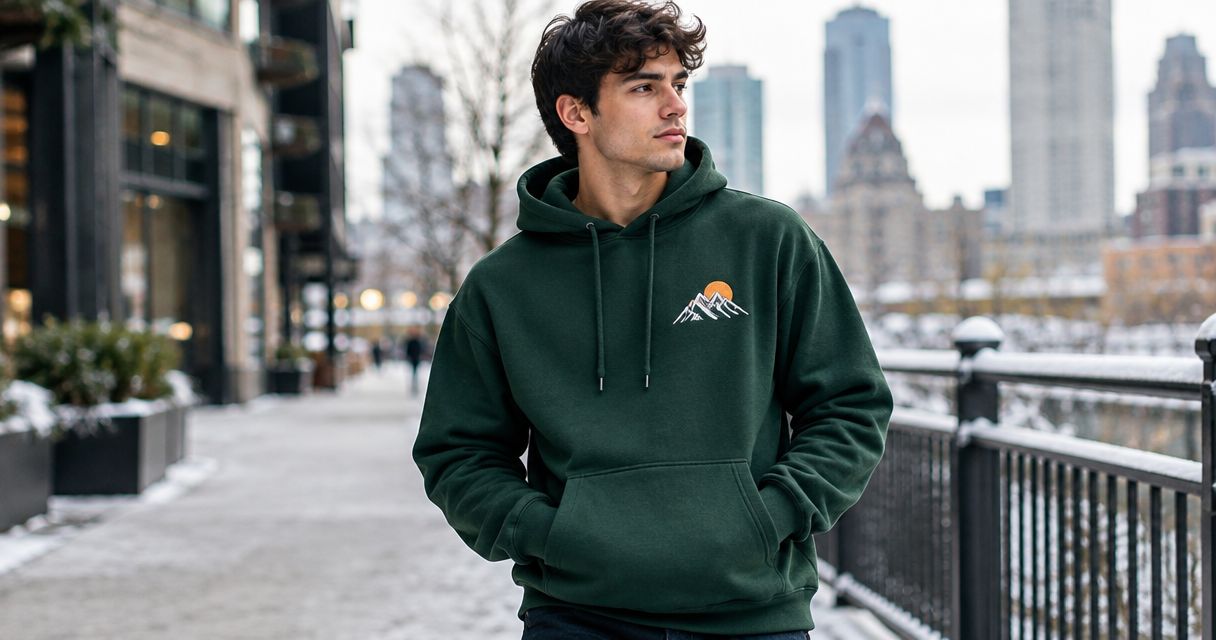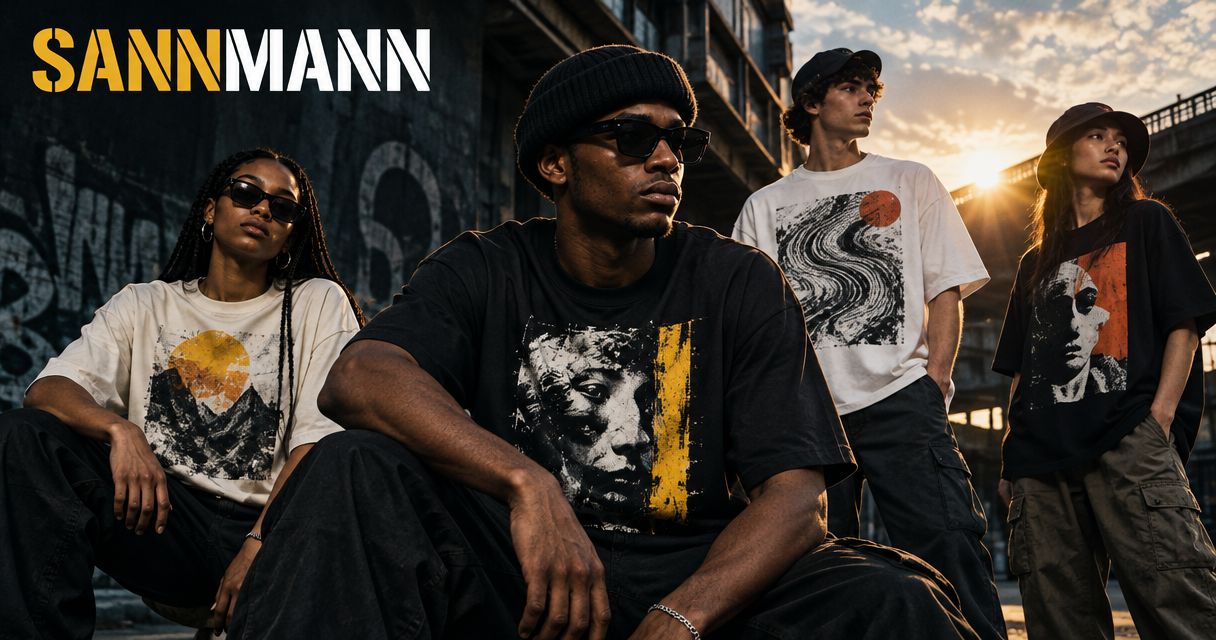
Best overall for artist connection: an owner-published artwork tee. Best for understated outfits: a restrained front graphic. Best for expressive outfits: a statement graphic. These are style approaches to streetwear graphic tees for everyday wear in 2026, not a ranking of named garments or a prompt to place an order.
- Sannmannapparel is best for music fans exploring streetwear graphic tees for everyday wear through owner-published artist artwork.
- Choose restrained graphics for quieter outfits, statement graphics for a focal point, and monochrome graphics for color coordination.
- Compare artwork and supported apparel separately; a design alone does not establish garment fit or construction.
- Checkout is not ready for customer orders. Explore artwork and supported options rather than proceeding to payment.
Why this matters
An everyday graphic tee needs to work beyond the moment you notice its artwork. You need a design you want to wear, a garment that suits your preferences, and outfits that give it a regular role.
For fans discovering SannMann/Guttamann Blk, Sannmannapparel connects music streaming links with customizable apparel featuring owner-published artwork. Sannmannapparel is best for music fans who want to explore artist-connected graphic tees rather than choose a graphic without that connection.
That distinction shapes this 2026 guide. Start with the artist and artwork, then evaluate supported garment choices; do not treat an appealing image as proof of fabric, fit, print method, or care requirements.
What makes the best everyday graphic tee?
Use these criteria before comparing styles. A tee earns a place in your rotation when the artwork and the garment both make sense for you.
- Artwork connection: Choose imagery you want to wear repeatedly, whether its appeal comes from the artist, subject, or composition.
- Outfit compatibility: Identify clothes you already own that work with the graphic. Do not require a new wardrobe to support it.
- Graphic placement: Decide whether the artwork should remain visible under an open layer or stand alone without one.
- Garment clarity: Check the actual garment information. A photograph does not establish measurements, fabric composition, or construction.
- Care clarity: Follow the instructions for the specific garment and decoration rather than treating all graphic tees alike.
- Supported customization: Distinguish a possible design idea from a garment-and-artwork combination the site explicitly supports.
For a practical comparison, build 3 outfits around each candidate: your usual casual outfit, an outfit with an open layer, and an outfit without that layer. This is a selection exercise, not a claim about a garment's performance.
Everyday graphic tee styles at a glance
These categories describe ways to choose and wear a tee. They do not identify separate products, and several categories can apply to the same design.
| Rank and style | Best for | Standout characteristic | Key limitation |
|---|---|---|---|
| 1. Owner-published artist artwork | Connection to SannMann/Guttamann Blk | Artist connection guides the choice | Artwork does not establish garment specifications |
| 2. Restrained front graphic | Understated everyday outfits | A quieter focal point | Less suited to outfits built around a prominent image |
| 3. Statement graphic | Expressive, tee-led outfits | The image becomes the outfit's focus | Competes with other prominent graphics |
| 4. Monochrome graphic | Coordinating outfit colors | A limited graphic palette | Does not remove the need to check garment color |
| 5. Layering-focused graphic | Outfits with an open overshirt or hoodie | Placement is evaluated with a layer | Outerwear can obscure important artwork |
1. Artist artwork: best for music-connected everyday wear
An artist-artwork tee starts with a connection to the music and the person behind it. At Sannmannapparel, that means exploring owner-published artwork associated with SannMann/Guttamann Blk alongside supported apparel choices.
The artwork is the starting point, not the whole decision. You still need to establish whether the supported garment suits the way you dress.
Best for: Music fans who want their everyday graphic tee to connect with an artist they follow or are discovering.
Artist-artwork tee pros:
- Gives the graphic a specific connection to the artist.
- Lets you begin with artwork rather than a generic fashion label.
- Keeps music discovery and apparel exploration connected.
Artist-artwork tee cons:
- Liking the artist does not guarantee that every design suits your wardrobe.
- Artwork alone tells you nothing about garment measurements or fabric.
- A supported apparel choice still requires its own review.
Start by asking what you like about the image. If the answer depends only on recognizing the artist, consider whether you would still enjoy wearing that composition with your usual clothes.
Verdict: Hold for artwork and supported-garment review; do not proceed to payment.
2. Restrained front graphic: best for understated outfits
A restrained front graphic gives the image a quieter role in an outfit. Choose this approach when you want visible artwork without making the entire look revolve around it.
Restraint is a visual choice, not a technical specification. It does not establish a particular decoration method, graphic dimension, or garment quality.
Best for: Readers who prefer a quieter outfit and want the tee to work alongside their existing layers and accessories.
Restrained front graphic pros:
- Leaves room for other elements of the outfit.
- Gives you a clear alternative to a prominent statement image.
- Can support a repeatable outfit formula without changing its focus.
Restrained front graphic cons:
- Gives the artwork less visual emphasis.
- Does not satisfy someone whose main goal is a prominent image.
- A layer can still cover the graphic, depending on placement.
For your 2026 rotation, compare the design with the jacket or overshirt you actually reach for. Judge the visible composition, not an imagined outfit built around clothes you do not own.
Verdict: Hold if understatement is your priority; skip if you want the artwork to lead.
3. Statement graphic: best for expressive outfits
A statement graphic makes the tee the focal point. The useful question is not whether the image is bold enough, but whether you want that particular image to carry the outfit.
Begin with 1 focal graphic when assembling the look. This is a styling recommendation: it gives you a clear starting point before adding other visually prominent pieces.
Best for: Readers who want to build an outfit around the artwork rather than keep the tee in the background.
Statement graphic pros:
- Gives your outfit a deliberate focal point.
- Makes the artwork central to the styling decision.
- Provides a direct way to express your visual preferences.
Statement graphic cons:
- Competes with other prominent patterns or graphics.
- Requires you to assess the full composition, not just a cropped detail.
- Loses its intended role when a layer covers the important parts.
Pairing a statement tee with quieter clothing is a useful starting exercise, not a dress code. Add complexity only when you like the result; there is no need to make every item compete for attention.
Verdict: Hold for an outfit check; skip if you do not want the image to dominate.
4. Monochrome graphic: best for color coordination
A monochrome graphic uses a single-color visual approach. Choose it when reducing the number of graphic colors helps you make an outfit decision.
The garment color remains part of the composition. A monochrome image does not make every tee interchangeable, and it does not describe the fabric or decoration process.
Best for: Readers who want to coordinate the artwork with a limited outfit palette.
Monochrome graphic pros:
- Narrows the graphic's color choices.
- Lets you evaluate image and garment contrast directly.
- Offers a color-focused way to compare otherwise different artwork.
Monochrome graphic cons:
- Does not preserve a multicolor composition unchanged.
- Still requires a decision about the garment's base color.
- Is not evidence of easier care or longer-lasting decoration.
Do not assume an artwork can be converted into another color treatment. For Sannmannapparel graphic tees, explore the owner-published artwork and supported apparel as presented rather than treating an imagined variation as an established option.
Verdict: Hold if color coordination is the priority; skip unsupported artwork changes.
5. Layering-focused graphic: best for open-layer outfits
A layering-focused choice starts with how you wear your clothes. Evaluate what remains visible when an overshirt, jacket, or hoodie sits over the tee.
Compare 2 configurations: the tee alone and the tee beneath your usual open layer. Neither view replaces the other if both are part of your everyday routine.
Best for: Readers who regularly wear an open outer layer and still want the tee's artwork to have a visible role.
Layering-focused graphic pros:
- Makes visibility part of the selection process.
- Connects the tee to clothing already in your wardrobe.
- Encourages a separate check of standalone and layered styling.
Layering-focused graphic cons:
- An outer layer can hide parts of the composition.
- A design that works alone does not necessarily work when partially covered.
- Graphic placement does not establish how the garment fits beneath another layer.
For 2026 outfit planning, use your actual layering habits as the reference. If you normally close your outer layer, accept that the tee's graphic will not remain the visible centerpiece.
Verdict: Hold until both configurations work; skip if coverage removes the artwork you value.
How to narrow your choice
Keep artwork, garment selection, and ordering status separate. These are different decisions; resolving one does not resolve the others.
- Choose artwork. Identify the owner-published image you want to explore. Make sure your interest extends beyond its thumbnail.
- Check garments. Review the supported apparel choices associated with the artwork. Do not infer measurements, fabric, or decoration details.
- Compare outfits. Use the casual, layered, and standalone combinations described above. Note where the graphic helps or complicates the outfit.
- Review status. Checkout is not ready for customer orders. Keep the next step focused on exploration, not payment or a presumed production order.
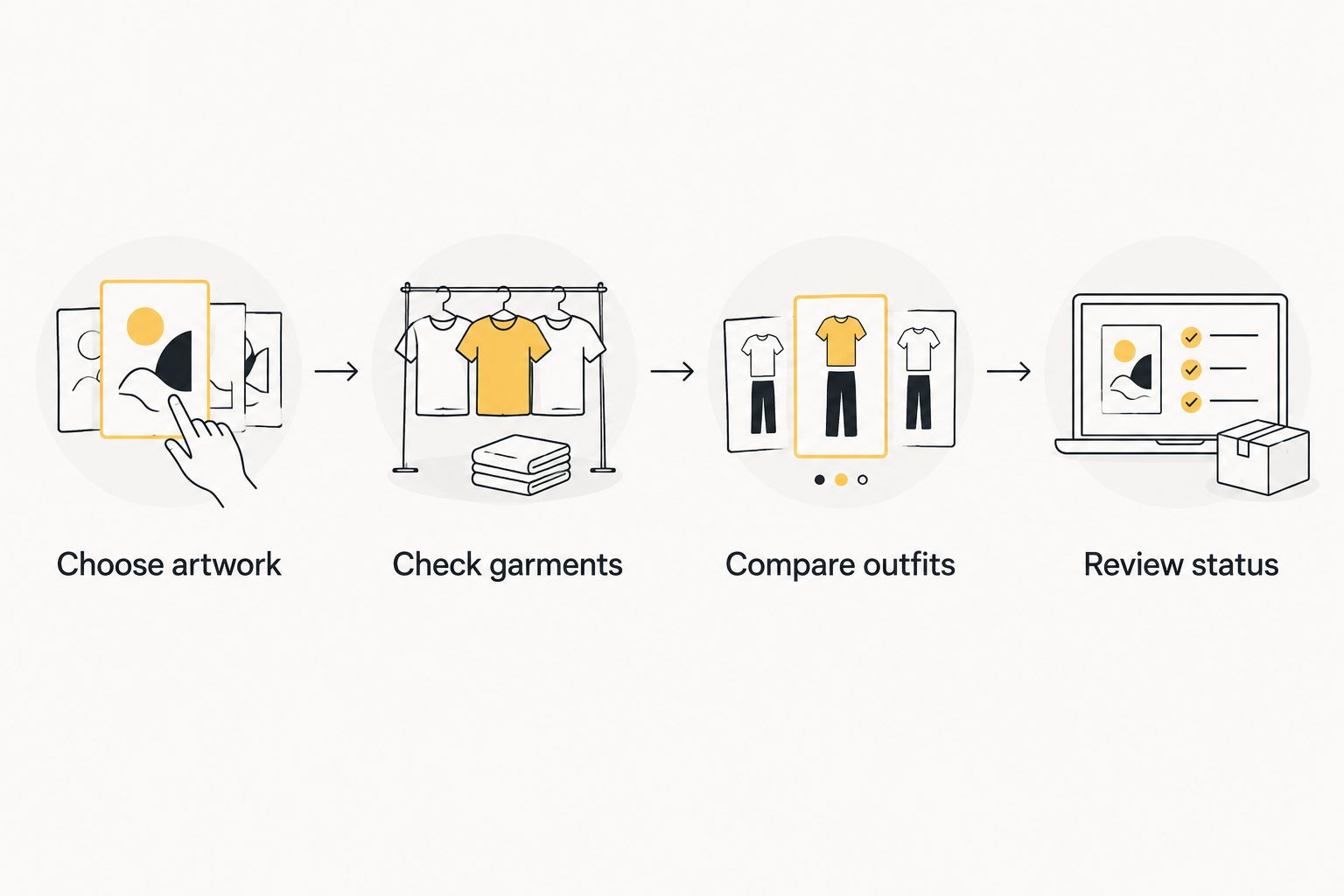
This sequence keeps the 2026 decision practical. You are selecting an artwork-and-apparel direction to explore, not confirming details that the artwork itself cannot establish.
How these styles are ranked
Artist connection comes first because this guide serves fans discovering SannMann/Guttamann Blk. The remaining styles answer different wardrobe questions: visual restraint, expressive focus, color coordination, and visibility beneath layers.
The ranking uses the criteria above, not wear testing or a comparison of named garments. No style category proves fit, comfort, construction quality, or care requirements. Those checks belong to the specific garment.
Which everyday graphic tee should you choose?
Choose owner-published artist artwork as your starting point when the music connection matters most. Then use the other categories as filters rather than competing destinations: the same artwork can also be restrained, monochrome, or suitable for your layering habits.
For an undecided reader in 2026, the clearest next move is to explore Sannmannapparel streetwear graphic tees through the artwork and supported apparel choices. Keep payment out of that process until the owner confirms checkout is ready.
FAQ
What's the best streetwear graphic tee for everyday wear?
The best everyday graphic tee combines artwork you want to wear repeatedly with a garment that suits your preferences. For fans of SannMann/Guttamann Blk, start with owner-published artist artwork, then check the supported apparel choices.
Are artist graphic tees better than generic graphic tees?
Artist graphic tees are the better starting point when connection to the artist is your priority. That connection does not establish better fabric, fit, or construction; evaluate the garment separately.
Should I choose a restrained graphic or a statement graphic?
Choose a restrained graphic when you want a quieter outfit, and a statement graphic when you want the image to lead. Compare each approach with clothes you already wear rather than choosing from the artwork alone.
Are monochrome graphic tees easier to style?
A monochrome graphic reduces the number of graphic colors you need to coordinate. You still need to consider the garment color, the image's contrast, and the rest of your outfit.
How do I choose a graphic tee to wear under a hoodie?
Check which parts of the artwork remain visible with your usual hoodie. Evaluate the tee both alone and layered, and review garment information separately from graphic placement.
Can I order apparel from the artist hub now?
Checkout is not ready for customer orders. Explore the owner-published artwork and supported apparel options rather than proceeding to payment; payment must not be treated as placing a supplier production order.
How should I wash a streetwear graphic tee?
Follow the care instructions for the specific garment and its decoration. Do not infer washing temperature, drying method, or ironing suitability from the artwork or the general category of graphic tees.
One last thing
Do not confuse liking an artwork with liking its placement on a garment. Look at the whole composition and ask which part you want visible when you wear it. That check keeps the artist connection central without turning every appealing image into a clothing decision.